Our Journey From
Roots to Resilience
The Day the Border Became a Lifeline
In 2011, Syria changed overnight. Peaceful calls for more freedom spiralled into a war that forced families to grab what they could and flee.
For millions, home became a memory.
During the years that followed, millions looked for safety next door. Türkiye opened its doors, and became a first refuge for people escaping danger. This wave was to reshape daily life. Neighbours got new neighbours. Communities began to share more than borders.
Faced with the largest refugee movement in the country’s modern history, Türkiye turned emergency reception into an organised response. Those who fled to Türkiye applied for Temporary Protection (TP) status, a key protection measure intended to ensure their right to access health care, education, and essential services. The Presidency of Migration Management took the lead steering this effort.
Needs Before Numbers
As more people arrived, systems were put to the test.
For millions, including the members of the host community, it was not only about getting through.
It was about the well-being and the future of generations. Whether children could enroll in school, whether young people could find a path to work, and whether families could feel safe enough to plan ahead.
So, we started by asking, not assuming or guessing.
We asked refugees and their neighbours what they needed most.
Their response was clear: they wanted safe, welcoming spaces; support for children and youth; guidance they could trust; and help navigating public services.
That is how the Community Centres Project was born with funding from the German Federal Ministry for Economic Cooperation and Development (BMZ). Our goal was to build local capacities and reach those hardest to reach.
Local Needs, Locally Led Solutions
How Genç Hayat Vakfı highlights the importance of localization in humanitarian action
In our latest partner interview, Çağdaş Özbakan from Genç Hayat Vakfı reflects on the importance of localization in their cooperation with GIZ, co-funded by the EU and BMZ.
He highlights how partners such as GIZ and the EU create space for local organizations to identify needs, shape their own responses and determine how activities are implemented.
This approach places local knowledge and experience at the centre of decision-making, helping ensure that responses are informed by the communities they aim to support.
Two Funds, One Goal
In 2019, two powerful partners, European Union Humanitarian Aid and Germany’s Federal Ministry for Economic Cooperation and Development (BMZ) joined forces.
Their co-funding created a rare, strategic bridge between rapid relief and long-term solutions. It propelled our work forward in reaching people faster.
This meant European Union Humanitarian Aid’s fast emergency tools could be used to get help on the ground, while the application of BMZ’s development approach built what families and communities need over time.
Many Voices, One Network
In a crisis, connections turn coordination into impact.
The Peer Support Network (ADA Türkiye) connects civil society partners of CLIP to facilitate collaboration and achieve sustainable assistance. Established in 2021, ADA Türkiye employs a semi-systematic mentoring approach for peer learning and capacity sharing between its partner organizations through trainings, workshops, joint initiatives, and sharing of good practices and tools. The network strengthens local capacities, enhances cooperation, widens outreach and increases organizations' eligibility for future funding by national and international actors.
How ADA Türkiye peers connect decides how they deliver:
Reach: The network opens doors to hard-to-reach and underserved areas, expanding outreach quickly and efficiently.
Agility: With connections, teams adapt plans and redeploy resources without delay.
Quality: Connection matches support to local realities, raising standards
ADA Türkiye mobilises different strengths for one purpose, to bring support to the most underserved areas.
ADA Türkiye partners provide comprehensive protection support to those most in need. The partners do not only share information, but they also actively support people to access services and navigate complex systems.
Through this approach, individuals are better able to access healthcare, education, and social services.
SENED's experience of expanding its reach through ADA Türkiye
Reaching communities in different regions is an important step towards understanding diverse needs and developing more inclusive responses.
In our latest partner interview, Deniz Kaya from SENED explains how cooperation through ADA Türkiye has enabled the organization to expand its engagement beyond the border regions where it had previously been active.
Through activities in locations including Van, Sakarya and Cappadocia, SENED has been able to connect with different communities and gain a deeper understanding of the needs of refugees and persons with disabilities.
These experiences have helped the organization identify challenges and develop responses informed by the needs of the people it works with.
Watch the video to learn how SENED is broadening its reach and strengthening its understanding of diverse communities.
ADA Türkiye partners have worked in 32 provinces across Türkiye since the inception of the project.
Through the Protection, Non-Formal Education (NFE), and Social Cohesion components, ADA Türkiye partners have reached thousands of people across the country, including more than 52,000 people in Istanbul, over 33,000 in Gaziantep, more than 31,000 in Hatay, and more than 16,000 in both Adıyaman and Ankara.
In the earthquake-affected provinces of Gaziantep, Hatay, Adıyaman, Kilis, Malatya, and Kahramanmaraş, ADA Türkiye partners implemented post-earthquake activities under the CLIP components, including cash-based interventions, psychosocial support (PSS) services, and community-based solidarity group activities.
More than 30.000 individuals benefitted from emergency and basic needs support delivered by ADA Türkiye partner organisations after February 6 earthquakes; more than 29.000 non-food items, and more than 7.000 food items have been distributed to those in need in the earthquake-affected region.
The goal is to strengthen the personal and socio-economic resilience of both refugees and vulnerable members of the host community.
Toward this goal, ADA Türkiye partners make a difference in four equally important dimensions:
What People Can Rely On
Protection
Dignity first. ADA Türkiye provides safe environment for those most at risk. Protection services include psychosocial support, legal and social counselling, and GBV prevention and response. Protection services are confidential, accessible, and tailored to needs.
Non-Formal Education
Language and life-skills classes offered by ADA Türkiye, with the addition of hands-on trainings, help people navigate daily life. When public institutions are the right doorway, referrals let families reach the right service quickly, keeping learning accessible at school, work, and in everyday life.
Social Cohesion
ADA Türkiye strengthens social cohesion by bringing people together and fostering meaningful connections within their communities. By encouraging participation and interaction, it helps build a stronger sense of belonging while promoting more positive perceptions and attitudes between different groups.
Capacity Development
Quality services require strong skills. ADA Türkiye's partners empower their locally acting peers by mentoring and training on the spot. By this, managerial and technical skills are continuously at the highest level and shared as well with state institutions to make services accessible, accountable, and sustainable.
See how ADA Türkiye partners’ programs and activities change lives for the better, and how the network builds capacities:
Crisis on top of a Crisis
On February 6, 2023, two devastating earthquakes struck 11 provinces in Türkiye, turning a hard reality into a harder one.
Homes collapsed. Roads cracked.
ADA Türkiye responded swiftly, coordinating with its local partners to deliver relief and psychosocial support.
Meet some of the households here.
The Power of Cash Assistance
In the aftermath of the earthquakes, ADA Türkiye partners unlocked help that people could use immediately.
Based on rapid assessments of needs, it included one-off multi-purpose cash assistance that reached around 10.000 households affected by the earthquakes, so that families could cover what mattered most.
Click to see how Cash Assistance elevated households affected by the earthquakes.
In emergencies, immediate relief saves lives.
As weeks turn into months, education is often the first thing to be forgotten. After the earthquakes, ADA Türkiye partners chose a different path. We kept learning within reach.
Through Cash2Lift and education-focused case management, families got targeted help so children could enroll, reenroll, or stay in class. Tailored support guided learners at risk of dropping out, making sure a crisis didn’t turn into a lost generation.


From the Ground Up
ADA Türkiye relies on local insight and local leadership, and not on-size-fits all designs. This is localisation in practice.
The goal is lasting solutions, so activities are co-designed with communities and the way is open for real ownership. That way, support doesn’t fade when a project ends. It keeps working because it’s led from within.
Because solutions that last are built where life happens, by the people living it.
Local Leaders, Real Impact
Listen to the outcomes of our approach from local leaders.
Partners in ADA Türkiye’s Peer Support Network describe how shared experience make their work stronger.
Lives Touched
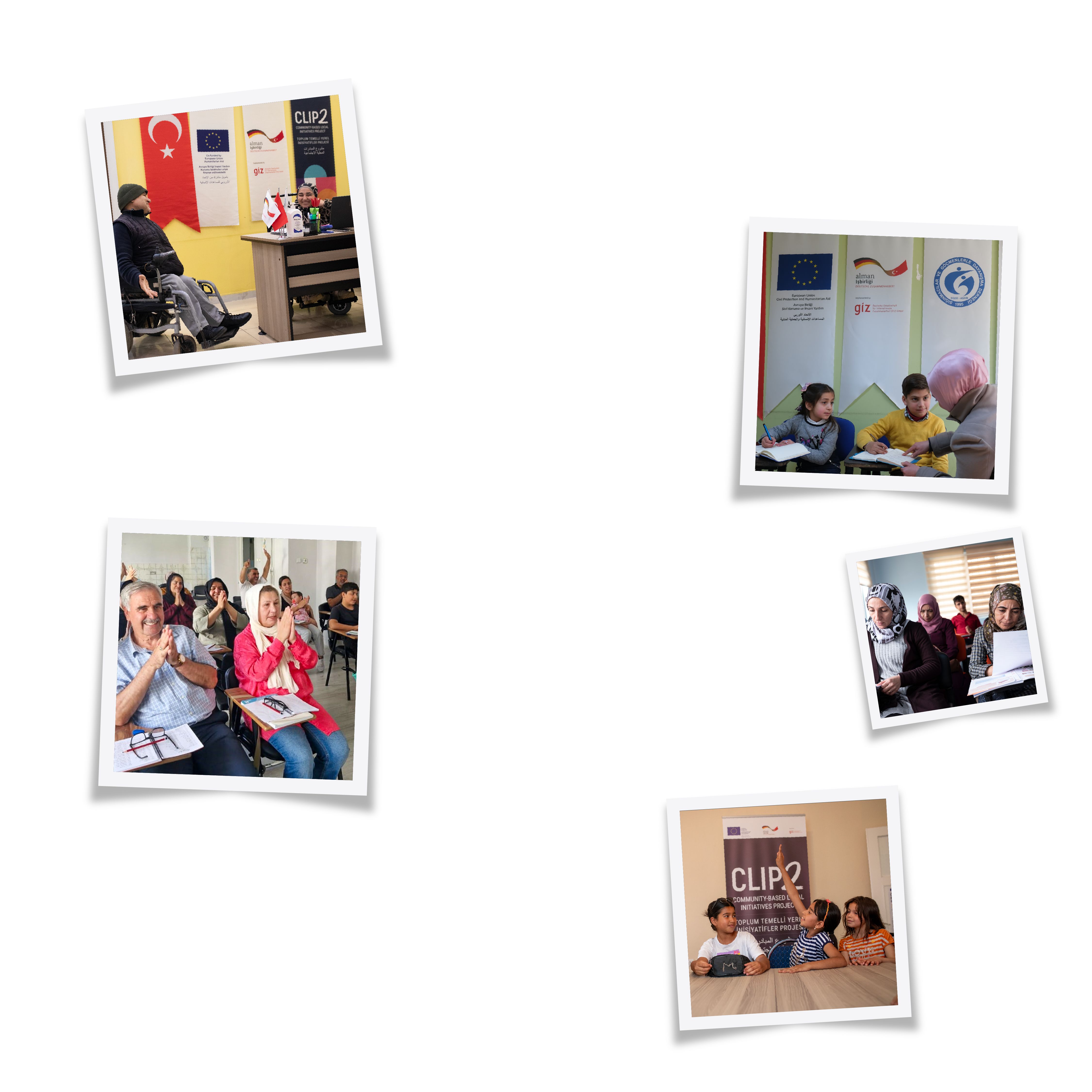
From 2021 to 2026, ADA Türkiye reached more than 222,000 refugees and asylum seekers and over 66,000 people in host communities.
We ensured families could access essential support and kept children learning.
and helped people rebuild confidence and participate in their neighbourhoods.
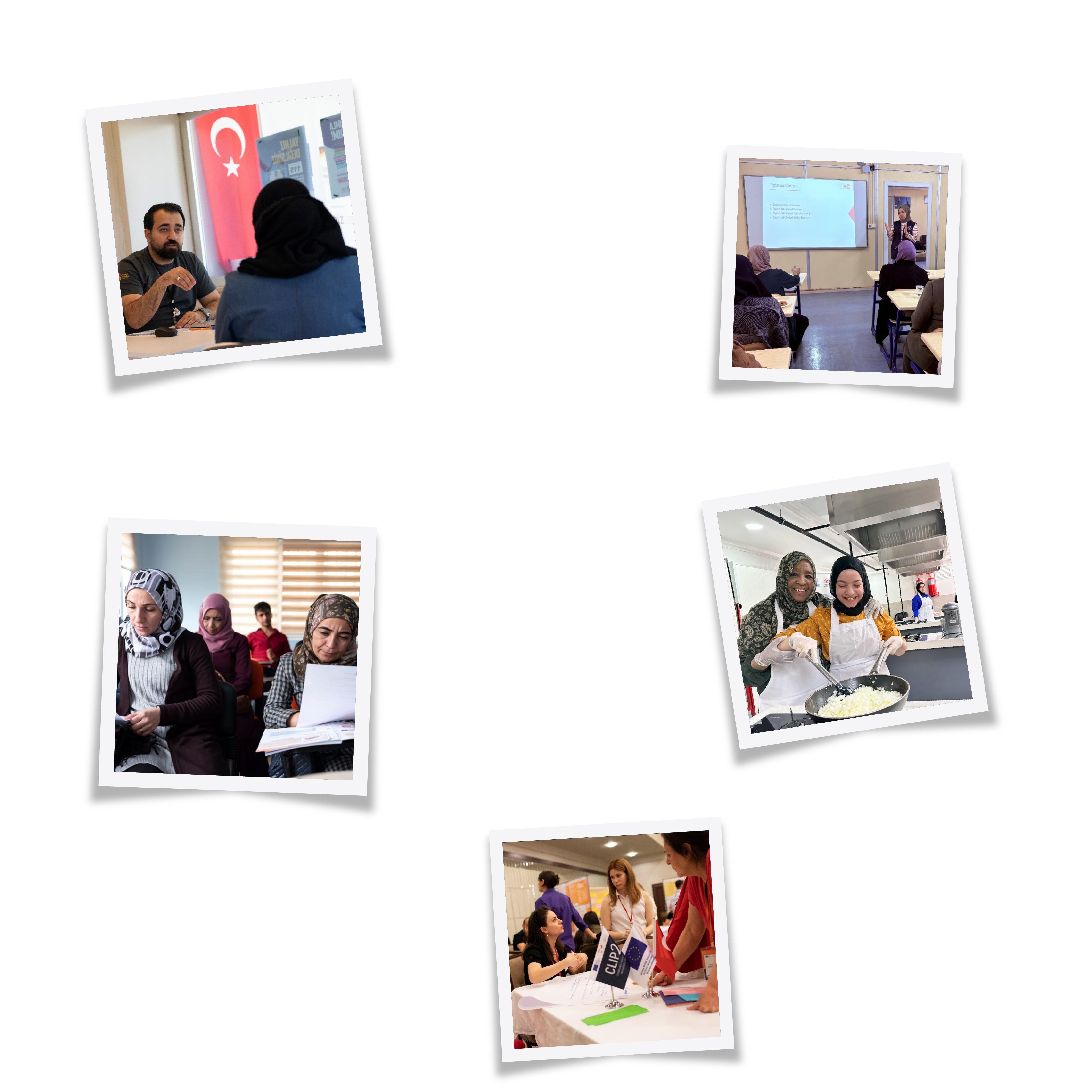
ADA Türkiye’s network of local partners expanded protection services for vulnerable people across Türkiye. Since the inception of the project, more than 219,000 individuals have accessed protection services through CLIP activities.
More than 115,000 people received counselling, psychosocial support (PSS), and case management services, while over 53,000 benefited from multi-purpose cash assistance. Following the earthquakes, more than 30,000 individuals received emergency and basic-needs support in affected provinces.
The project also supported women and girls through activities focused on preventing and responding to sexual and gender-based violence (SGBV).
Together with ADA Türkiye partners, these activities improved people’s well-being, strengthened access to essential services, and supported local protection systems and referral mechanisms.
Since its inception, CLIP has also worked with ADA Türkiye and a broad network of local partners to expand opportunities for learning and social inclusion for refugees and host communities across Türkiye. Around 21,000 people participated in non-formal education (NFE) activities, while more than 11,500 individuals attended language courses. In parallel, over 140,000 people joined social cohesion activities promoting inclusion, mutual understanding, and community engagement.
By combining education opportunities with community-based activities, the project helped participants improve their skills, confidence, and participation in daily and social life. This approach also contributes to stronger social cohesion between refugees and host communities, and individuals move from vulnerability towards resilience.
Participants report improved emotional well-being, reduced isolation, and stronger coping capacities. Parents develop better communication with their children, and communities become more connected and supportive.
Since its inception, the CLIP project has also delivered around 40 capacity-building trainings for partners and relevant stakeholders to strengthen local capacities and improve the quality of services.
Whatever Crisis Comes Next
The future isn’t authored from the top down.
It’s written by the people who live it every day.
With local know-how and proven practice, the ADA Türkiye Peer Support Network moves faster, adapts smarter, and keeps communities at the centre.
ADA Türkiye is prepared for whatever crisis comes next.
 Built with Shorthand